In Part 1 of this series, we explored how ServiceNow manages technology infrastructure (IT Workflows) and protects revenue (Customer Workflows). Now, we turn our attention inward to the people who keep the business running.
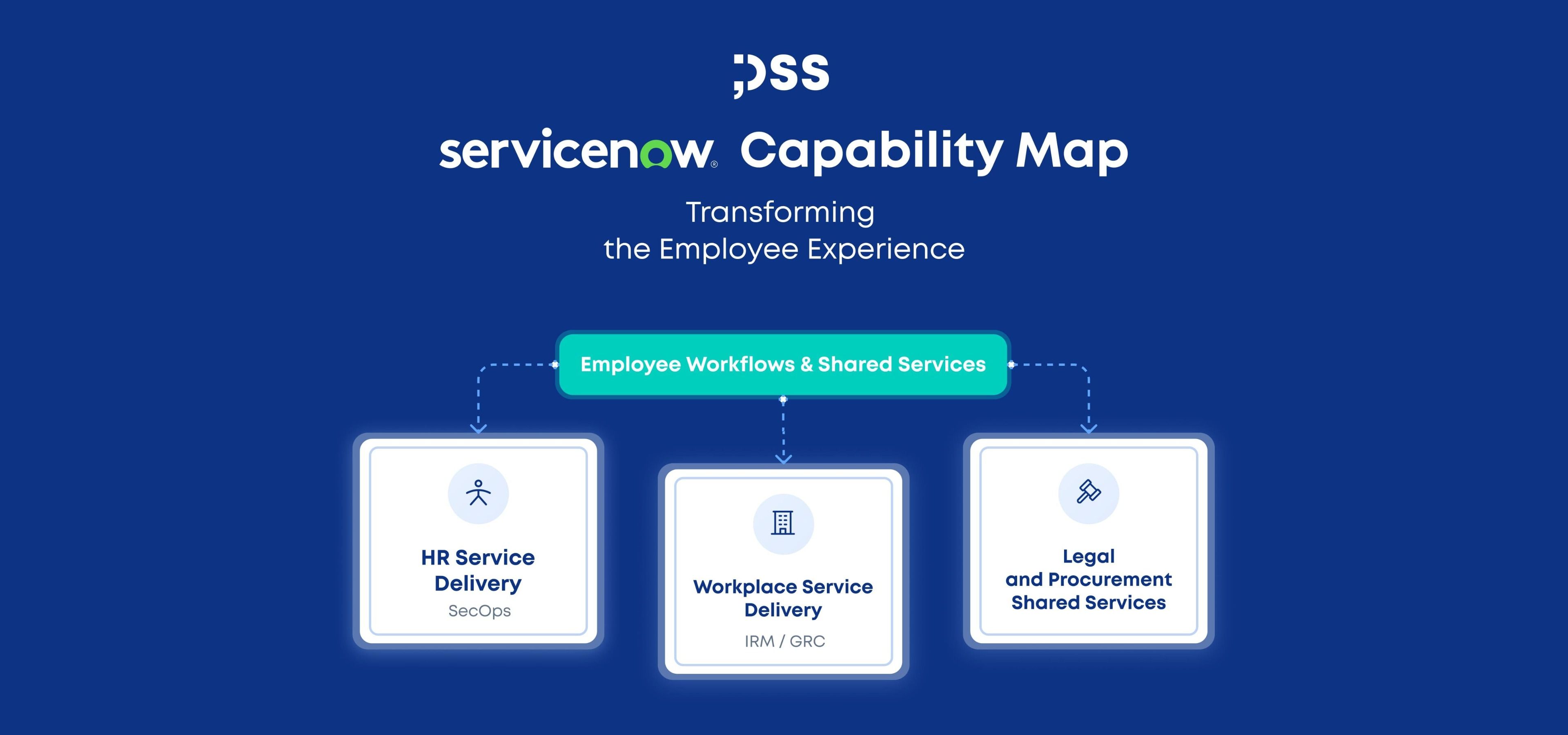
Historically, employees have had to navigate a fragmented mess of systems to get things done: emailing HR for payroll questions, using a separate app to book a desk, and navigating a complex portal to request legal review. Part 2 breaks down Employee Workflows and Shared Services, detailing how ServiceNow consolidates these disparate departments into a single, unified employee experience.
1. HR Service Delivery (HRSD)
Moving HR away from shared inboxes and into structured, automated workflows.
- HR Case and Knowledge Management
- Lifecycle Events (Enterprise Onboarding and Transitions)
- Employee Center
- Now Assist for HR (Generative AI)
HR Case and Knowledge Management
- Main Purpose: To standardize and track employee HR inquiries.
- How it Functions: Provides a secure portal for employees to search for HR policies or submit specific requests (like benefits questions or payroll discrepancies), routing them to the correct HR specialist.
- The Problem it Solves: Eliminates the confusing "[email protected]" inbox, ensuring confidential employee requests are tracked securely and resolved within strict Service Level Agreements (SLAs).
Lifecycle Events (Enterprise Onboarding and Transitions)
- Main Purpose: To automate complex, cross-departmental employee journeys.
- How it Functions: Triggers a chain reaction of tasks across multiple departments for events like onboarding. A single "New Hire" trigger assigns tasks to IT (laptop provisioning), Facilities (desk assignment), Security (badge creation), and HR (payroll setup) simultaneously.
- The Problem it Solves: Fixes the disjointed onboarding experience where a new employee shows up on day one but has no laptop, no badge, and no system access because departments failed to communicate.
Employee Center
- Main Purpose: To serve as the single, unified intranet and portal for all employee needs.
- How it Functions: Provides a personalized, consumer-like portal where an employee can view company news, request IT help, log an HR ticket, and book a conference room - all from one screen.
- The Problem it Solves: Stops "portal fatigue." Employees no longer need to remember a dozen different URLs or systems to find help or complete internal tasks.
Now Assist for HR (Generative AI)
- Main Purpose: To provide instant answers to HR questions and assist HR agents.
- How it Functions: Uses Now Assist AI to instantly summarize dense HR policy documents into conversational answers for employees, or to draft follow-up communications for HR agents.
- The Problem it Solves: Drastically reduces the volume of repetitive questions HR teams receive (e.g., "What is the parental leave policy?"), freeing them up for complex employee relations issues.
2. Workplace Service Delivery (WSD)
Managing physical office spaces, hybrid work logistics, and facility requests.
- Workplace Case Management
- Space and Room Reservation
- Workplace Indoor Mapping
- Visitor Management
Workplace Case Management
- Main Purpose: To handle maintenance and facility requests.
- How it Functions: Allows employees to report physical issues (e.g., a broken light, a spill, or temperature control issues), routing the work to local facility managers.
- The Problem it Solves: Moves building maintenance requests out of verbal conversations and into a tracked system, ensuring safe and comfortable work environments.
Space and Room Reservation
- Main Purpose: To manage desk hoteling and conference room bookings.
- How it Functions: Provides a visual interface (often integrated with Outlook or Teams) for employees to book desks, collaboration spaces, or equipment for specific times.
- The Problem it Solves: Alleviates the chaos of hybrid work schedules by preventing double-booked conference rooms and ensuring employees actually have a desk when they commute to the office.
Workplace Indoor Mapping
- Main Purpose: To help employees navigate corporate campuses.
- How it Functions: Digitizes building floor plans natively in the platform, allowing users to search for a colleague’s desk, an available meeting room, or the nearest fire exit, and provides turn-by-turn directions.
- The Problem it Solves: Saves significant time and frustration for new hires or visiting employees trying to find their way around massive, unfamiliar office buildings.
Visitor Management
- Main Purpose: To securely manage guests entering corporate facilities.
- How it Functions: Automates the visitor check-in process, including pre-registration, NDA signing, badge printing, and automatically notifying the host that their guest has arrived.
- The Problem it Solves: Replaces insecure paper sign-in logbooks at the front desk and ensures strict physical security and compliance.
3. Legal and Procurement Shared Services
Bringing governance and efficiency to legal counsel and vendor spending.
- Legal Request Management
- Contract Management
- Sourcing and Procurement Operations
- Supplier Lifecycle Management
- Enterprise Asset Management (EAM)
Legal Request Management
- Main Purpose: To act as the front door for all corporate legal needs.
- How it Functions: Provides intake forms for employees to request legal services (like NDA generation, contract reviews, or conflict of interest declarations) and routes them to the appropriate legal counsel.
- The Problem it Solves: Prevents the legal team from drowning in ad-hoc email requests, allowing them to prioritize risk and track the status of legal matters efficiently.
Contract Management
- Main Purpose: To oversee the lifecycle of corporate contracts.
- How it Functions: Centralizes contract creation, redlining, approval workflows, and e-signature integrations, while tracking expiration dates and renewal clauses.
- The Problem it Solves: Prevents auto-renewals of unwanted services and ensures no contract is signed without the proper executive and legal approvals.
Sourcing and Procurement Operations
- Main Purpose: To streamline how employees buy goods and services.
- How it Functions: Guides employees through the purchasing process, orchestrating the approvals between department heads, finance, and procurement teams before a purchase order is generated.
- The Problem it Solves: Eliminates "maverick spend" (employees buying things on company credit cards outside of approved channels) and enforces corporate spending policies.
Supplier Lifecycle Management
- Main Purpose: To manage the relationship and performance of third-party vendors.
- How it Functions: Acts as a centralized database for vendor information, tracking their onboarding, performance metrics, and compliance documentation.
- The Problem it Solves: Consolidates scattered vendor data, ensuring the company only does business with approved, compliant, and high-performing suppliers.
Enterprise Asset Management (EAM)
- Main Purpose: To manage non-IT physical assets.
- How it Functions: Tracks the financial value, location, and maintenance schedules of expensive corporate assets like fleet vehicles, factory machinery, or hospital beds.
- The Problem it Solves: Brings the same rigorous tracking used for IT servers to the rest of the business, preventing the loss or breakdown of high-value physical equipment.
FAQ
What is ServiceNow HR Service Delivery (HRSD)?
HR Service Delivery is the ServiceNow product suite that moves HR away from shared inboxes into structured, automated workflows. It includes HR case and knowledge management, lifecycle event automation, the Employee Center portal, and Now Assist generative AI for HR.
How does ServiceNow improve employee onboarding?
Lifecycle Events automates the entire onboarding journey: a single "New Hire" trigger simultaneously assigns tasks to IT, Facilities, Security, and HR, ensuring a new employee arrives on day one with a laptop, badge, desk, and full system access.
What is the ServiceNow Employee Center?
Employee Center is a single, personalized portal where employees can view company news, request IT help, log HR tickets, and book conference rooms - eliminating the need to navigate a dozen different internal systems.
What is Workplace Service Delivery (WSD) in ServiceNow?
WSD manages the physical workplace: facility maintenance requests, desk and room reservations, indoor mapping of corporate campuses, and secure visitor management - essential capabilities for hybrid work.
Can ServiceNow handle legal and procurement processes?
Yes. Legal Request Management and Contract Management act as the front door for corporate legal needs, while Sourcing and Procurement Operations and Supplier Lifecycle Management enforce spending policies and consolidate vendor data.
How can DSS help with ServiceNow implementation?
DSS is an official ServiceNow partner offering consulting, implementation, and managed services. Our certified team helps organizations configure and optimize any module across the ServiceNow Capability Map.


