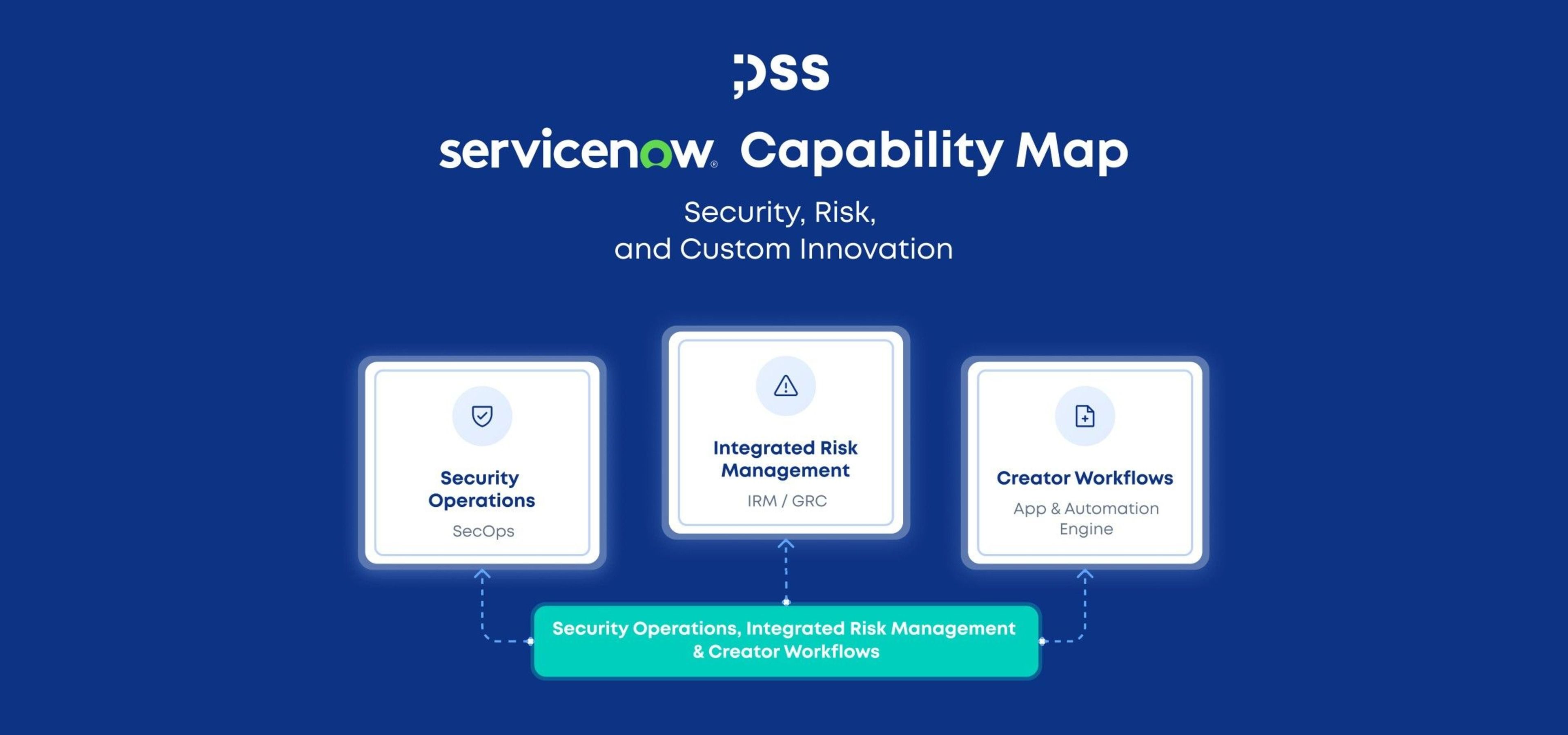
In the final installment of our capability map series, we shift from managing daily operations to protecting the enterprise and fostering innovation.
No digital transformation is complete without a massive focus on security and compliance. Furthermore, every business has unique processes that out-of-the-box software simply cannot handle. Part 3 breaks down Security Operations, Integrated Risk Management, and Creator Workflows, showing how ServiceNow secures the business and provides the tools to build custom applications from scratch.
1. Security Operations (SecOps)
Connecting security tools with IT operations to quickly patch vulnerabilities and respond to threats.
- Security Incident Response (SIR)
- Vulnerability Response
- Threat Intelligence
Security Incident Response (SIR)
- Main Purpose: To rapidly identify, contain, and eradicate cyber threats.
- How it Functions: Ingests alerts from security tools (like firewalls or endpoint protection), automatically categorizes the threat, and guides security analysts through automated playbooks (e.g., isolating a compromised laptop from the network).
- The Problem it Solves: Bridges the gap between the security team (who spots the threat) and the IT team (who usually has to fix it), drastically reducing the time it takes to contain a cyberattack.
Vulnerability Response
- Main Purpose: To prioritize and patch software weaknesses before they are exploited.
- How it Functions: Integrates with vulnerability scanners (like Qualys or Tenable), matches the found vulnerabilities against the ServiceNow CMDB to assess business impact, and automatically assigns patching tasks to the right IT team.
- The Problem it Solves: Solves the massive disconnect where security teams hand IT a spreadsheet of 10,000 vulnerabilities. It highlights exactly which vulnerabilities are on critical servers so IT knows what to patch first.
Threat Intelligence
- Main Purpose: To enrich internal security alerts with external global threat data.
- How it Functions: Automatically cross-references suspicious IP addresses, URLs, or files found in your network against global databases of known malicious indicators.
- The Problem it Solves: Prevents security analysts from wasting hours manually researching whether a specific alert is a false positive or a known, dangerous cyber campaign.
2. Integrated Risk Management (IRM / GRC)
Managing compliance, audits, and business continuity in a single system of record.
- Policy and Compliance Management
- Risk Management
- Audit Management
- Third-Party Risk Management
- Business Continuity Management
Policy and Compliance Management
- Main Purpose: To ensure the organization adheres to internal rules and external regulations.
- How it Functions: Digitizes regulatory frameworks (like GDPR, HIPAA, or ISO), maps them to internal policies, and automates control testing to prove compliance continuously.
- The Problem it Solves: Replaces massive, static spreadsheets that are out of date the moment they are created, ensuring the business is always audit-ready.
Risk Management
- Main Purpose: To identify, assess, and mitigate enterprise and IT risks.
- How it Functions: Provides a centralized register to log potential business risks, assess their financial or operational impact, and assign mitigation tasks to specific owners.
- The Problem it Solves: Moves risk management out of siloed departments, giving the C-Suite a consolidated dashboard of the company’s true risk exposure.
Audit Management
- Main Purpose: To streamline internal and external audits.
- How it Functions: Provides a dedicated workspace for auditors to scope engagements, request evidence from system owners, and track remediation tasks for any failed controls.
- The Problem it Solves: Eliminates the frantic, chaotic scramble for evidence via email every time an external auditor shows up.
Third-Party Risk Management
- Main Purpose: To assess the security posture of vendors and partners.
- How it Functions: Automates the process of sending security questionnaires to vendors, scoring their responses, and tracking any security gaps they need to fix.
- The Problem it Solves: Protects the company from data breaches caused by insecure third-party vendors (supply chain attacks).
Business Continuity Management
- Main Purpose: To keep the business running during major disasters.
- How it Functions: Guides organizations through business impact analyses, helps create disaster recovery plans, and orchestrates response exercises for events like natural disasters or cyber outages.
- The Problem it Solves: Ensures that recovery plans are actionable, tested, and tied directly to real infrastructure data, rather than sitting in a binder on a shelf.
3. Creator Workflows (App Engine & Automation Engine)
The low-code/no-code toolset that allows companies to digitize their own unique processes.
- App Engine Studio
- Integration Hub
- RPA Hub (Robotic Process Automation)
- Document Intelligence
App Engine Studio
- Main Purpose: To empower both developers and business users to build custom applications.
- How it Functions: Provides a visual, drag-and-drop interface to create data tables, design user portals, and build automated workflows without needing to write heavy code.
- The Problem it Solves: Clears the massive IT backlog. Instead of waiting months for IT to build a custom app, departments can safely build their own digital workflows within IT’s approved guardrails.
Integration Hub
- Main Purpose: To connect ServiceNow seamlessly to external software.
- How it Functions: Provides hundreds of pre-built "spokes" (API connections) to tools like Workday, Salesforce, Active Directory, or Jira, allowing ServiceNow workflows to take action in those systems.
- The Problem it Solves: Eliminates the need for developers to write and maintain complex, custom API code every time systems need to talk to each other.
RPA Hub (Robotic Process Automation)
- Main Purpose: To automate manual tasks in legacy systems that lack APIs.
- How it Functions: Deploys software "bots" that mimic human keystrokes and mouse clicks to copy, paste, and move data across older software screens.
- The Problem it Solves: Digitizes the "last mile" of automation, freeing employees from mind-numbing "swivel chair" tasks where they manually copy data from one system to another.
Document Intelligence
- Main Purpose: To extract actionable data from unstructured documents.
- How it Functions: Uses AI to read scanned documents, PDFs, or images (like invoices or ID cards) and automatically populates the extracted text into ServiceNow fields.
- The Problem it Solves: Eradicates manual data entry, speeding up processes like accounts payable or application processing while drastically reducing human error.
FAQ
What is ServiceNow Security Operations (SecOps)?
SecOps connects security tools with IT operations. Security Incident Response ingests alerts, categorizes threats, and guides analysts through automated playbooks, drastically reducing the time it takes to contain a cyberattack.
How does Vulnerability Response prioritize patching?
It matches findings from scanners like Qualys or Tenable against the ServiceNow CMDB to assess business impact, highlighting exactly which vulnerabilities sit on critical servers so IT knows what to patch first.
What is Integrated Risk Management (IRM) in ServiceNow?
IRM manages policy and compliance, enterprise risk, audits, third-party risk, and business continuity in a single system of record, with automated control testing that keeps the business always audit-ready.
Do I need coding skills to build applications on ServiceNow?
No. App Engine Studio provides a visual, drag-and-drop interface so business users can build custom applications within IT's approved guardrails, while Integration Hub and RPA Hub connect and automate external and legacy systems.
Where can I read the rest of the capability map series?
Part 1 covers IT and Customer Workflows, and Part 2 covers Employee Workflows and Shared Services.
How can DSS help with ServiceNow implementation?
DSS is an official ServiceNow partner offering consulting, implementation, and managed services. Our certified team helps organizations configure and optimize any module across the ServiceNow Capability Map.


